← Portfolio / Kenya
In Kenya’s Turkana region, access to water, land and work shapes the lives of families, herders and labourers.
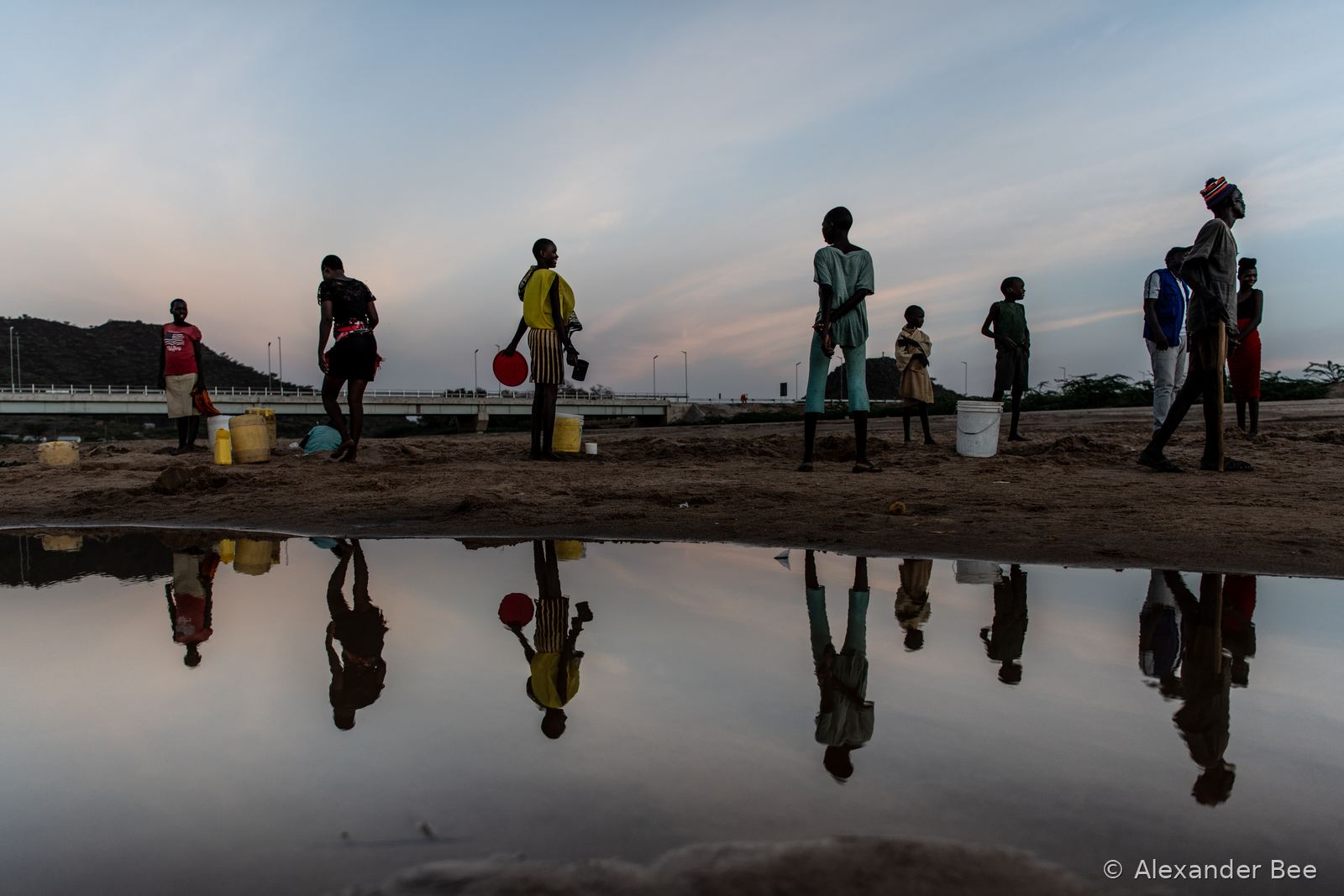
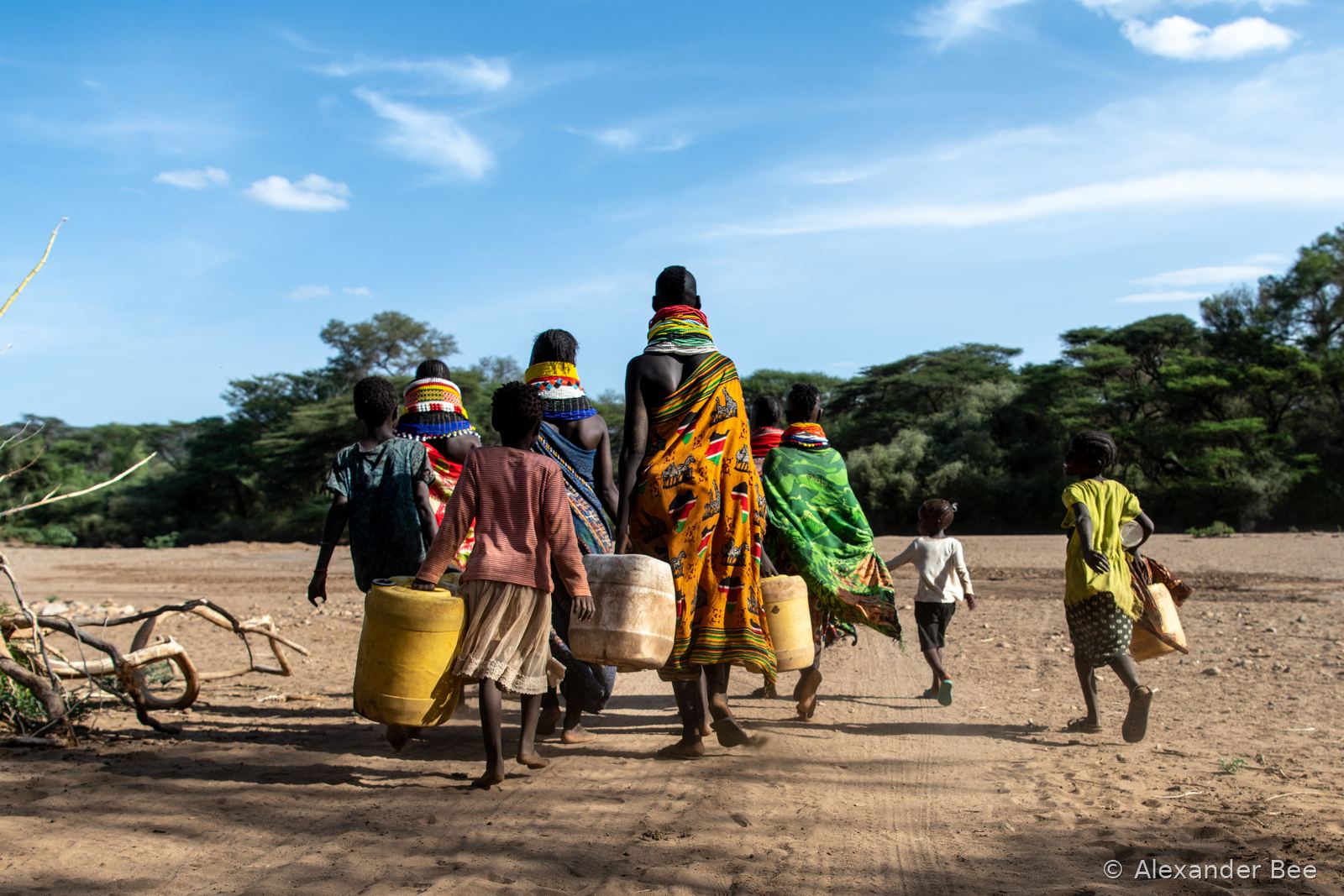
This photo story on Turkana in Kenya, made in February 2022, tells of the water, land and work that shape the daily lives of families, herders, fishermen and workers.
With climate change, droughts hit the already arid Turkana harder and more often. People near the borders must share their scarce resources with their Ugandan and Ethiopian neighbours. This sharing is often violent. Houses burned after retaliation raids line the road.
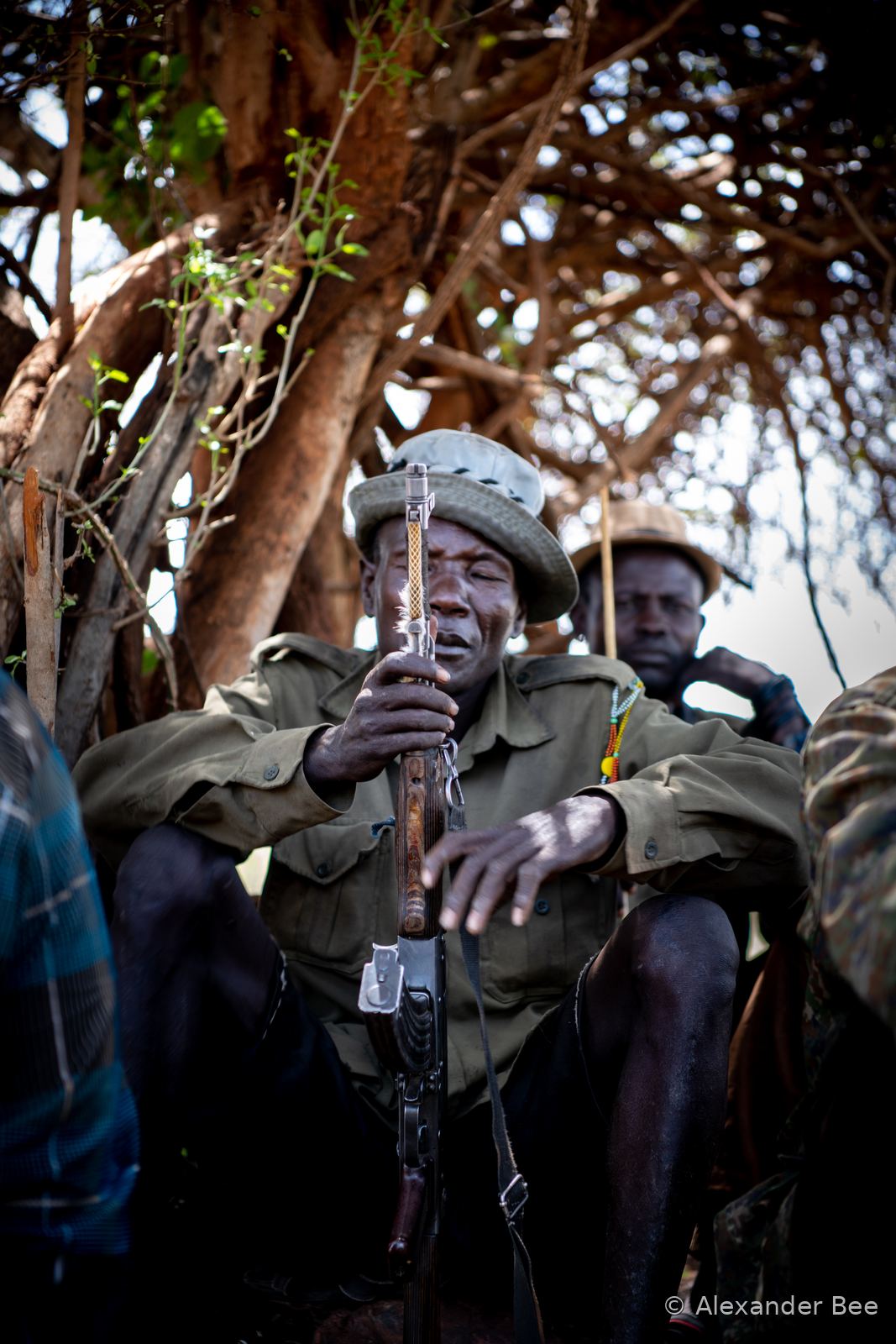
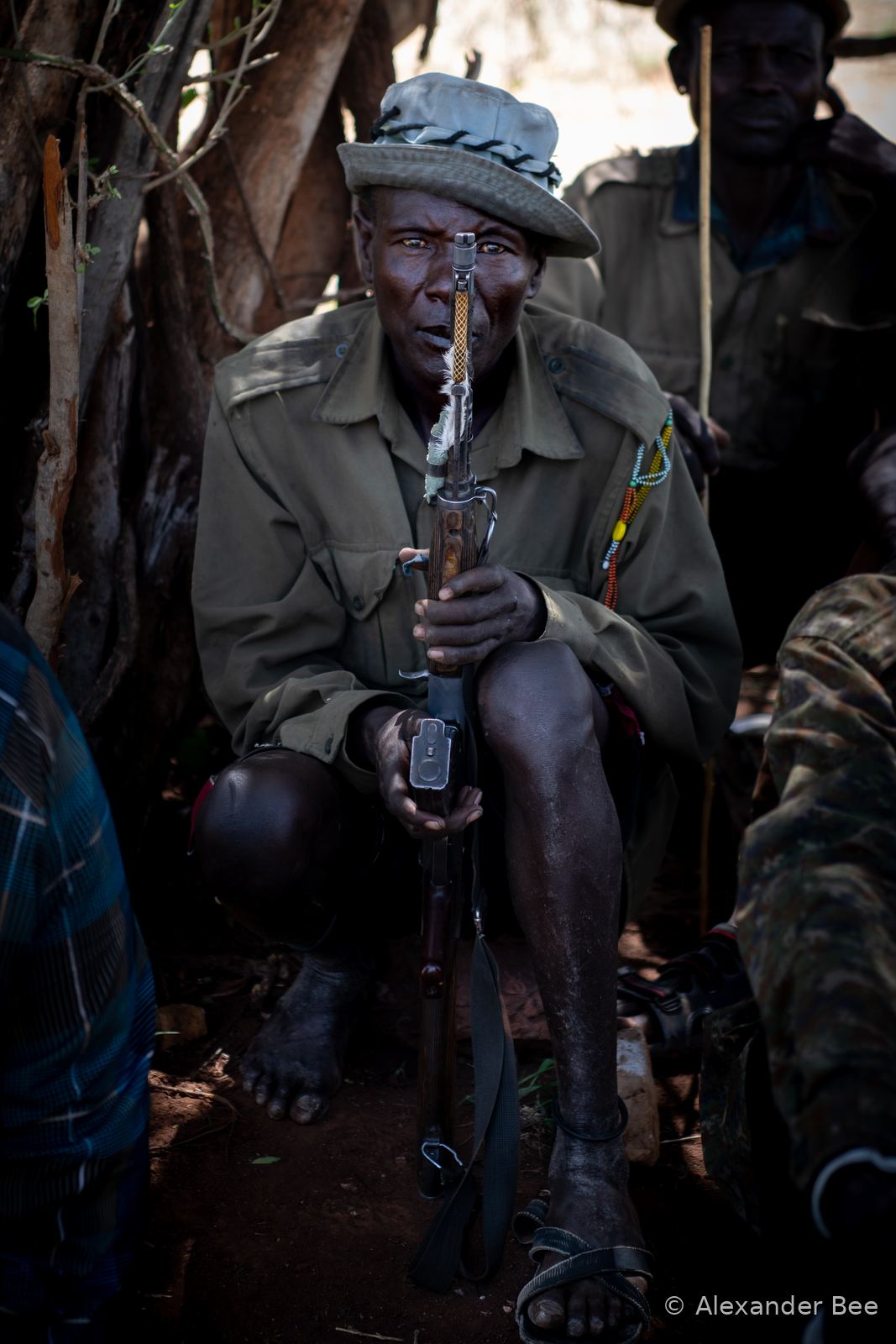
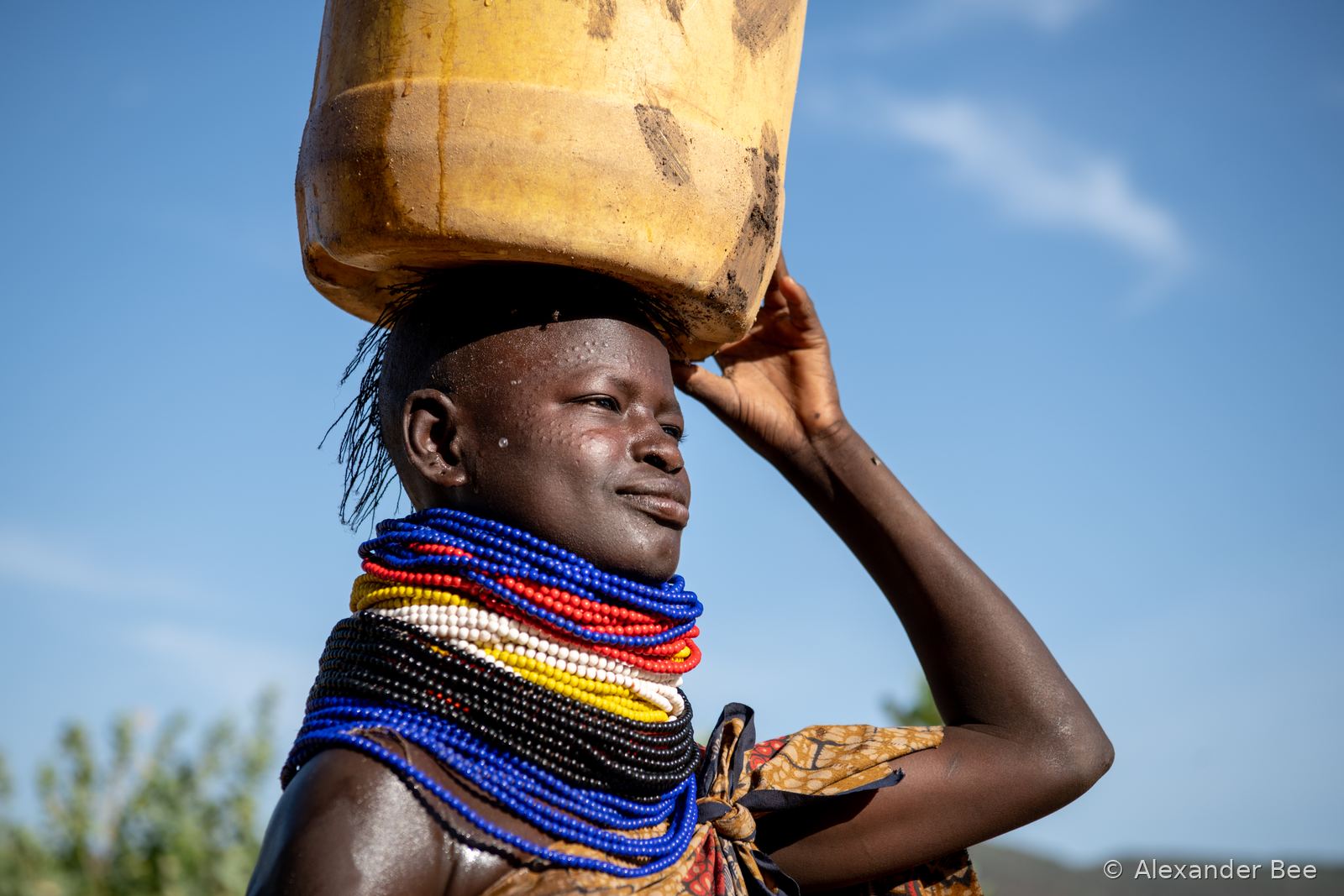
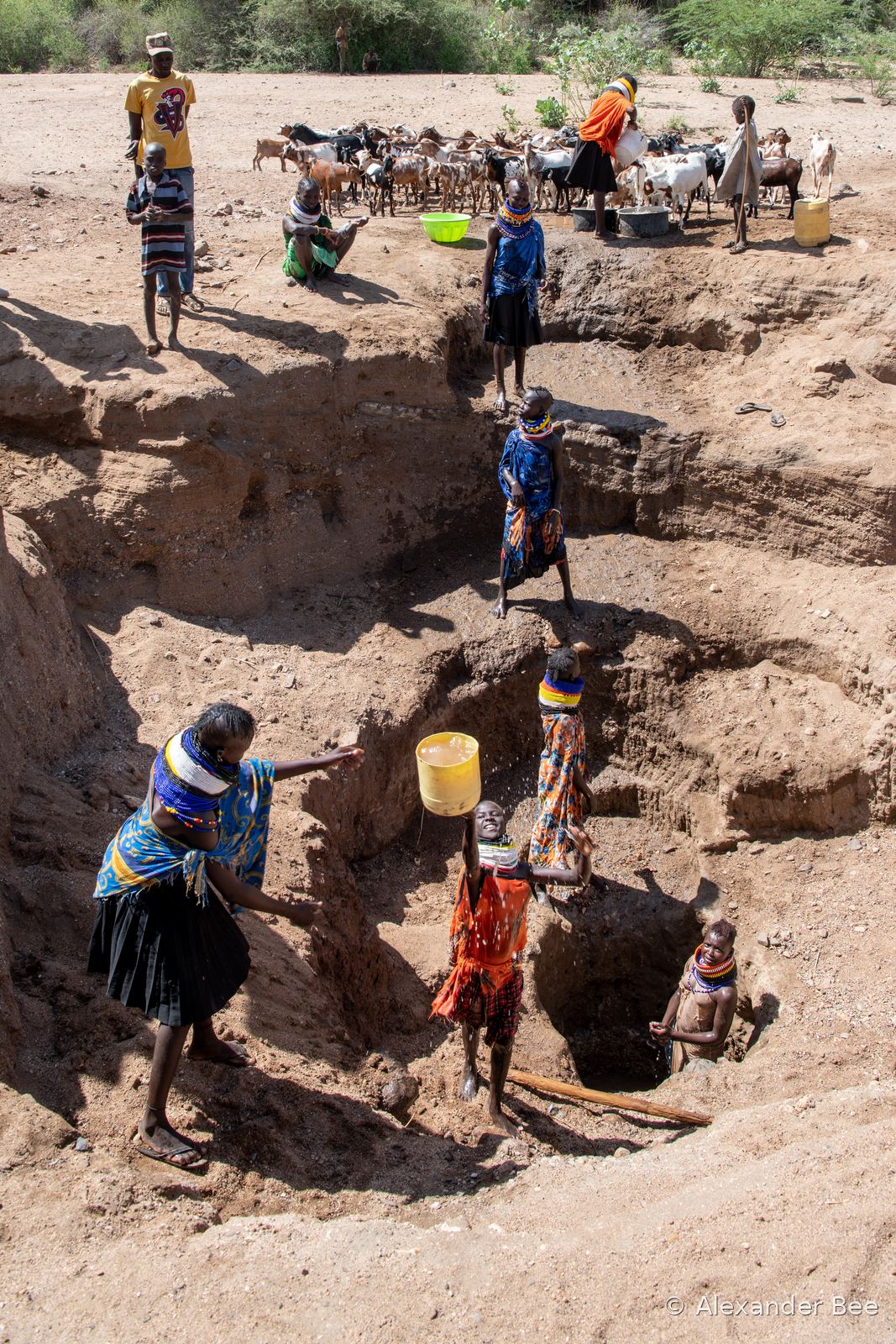
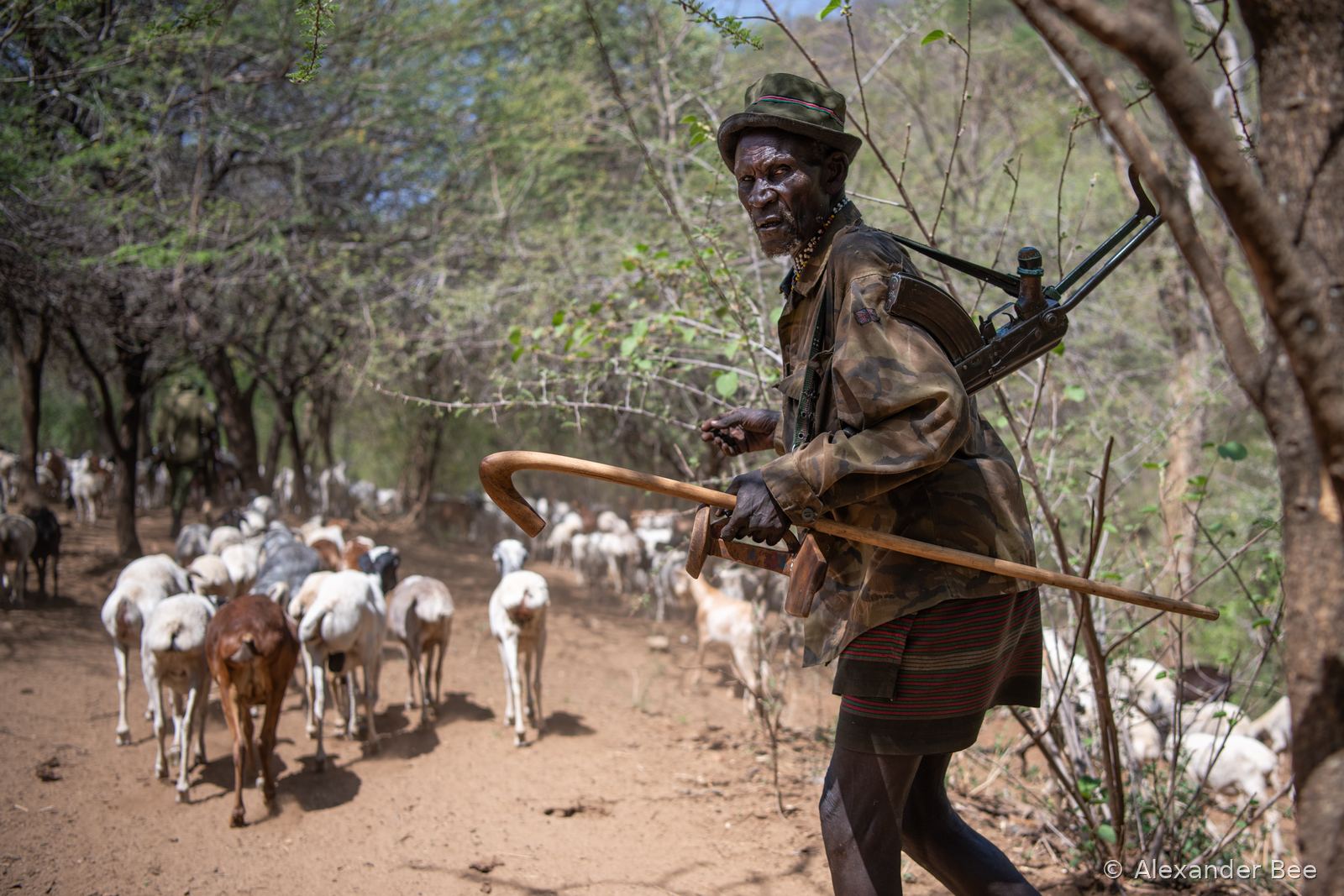
In this context, herders escort the women who fetch water, a Kalashnikov on their shoulder. According to them, arming themselves is a must to defend access to water for livestock and to ensure the survival of the community. At the bottom of wells ten metres deep, women form a chain to lift barrels weighing dozens of kilos by sheer arm strength.
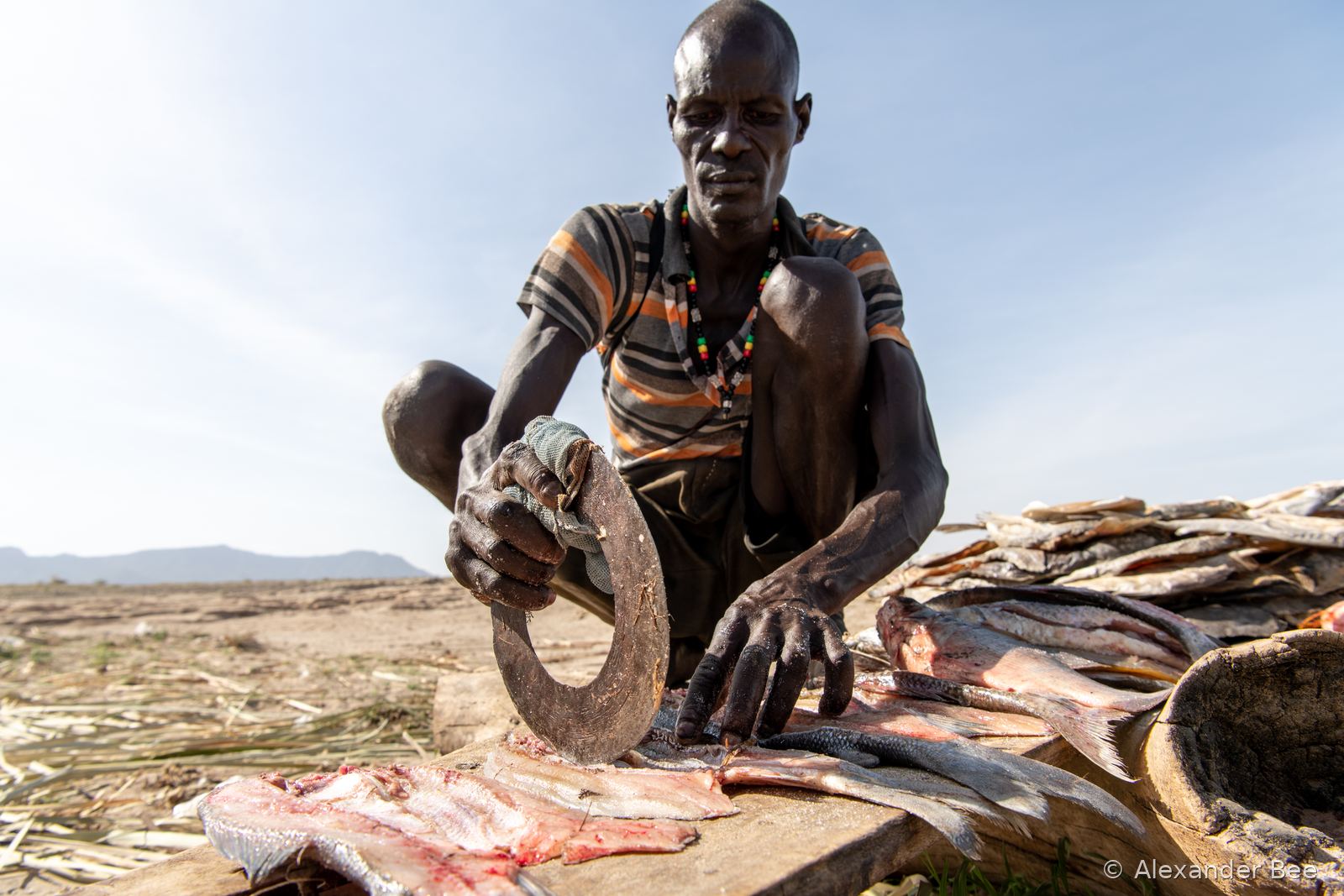
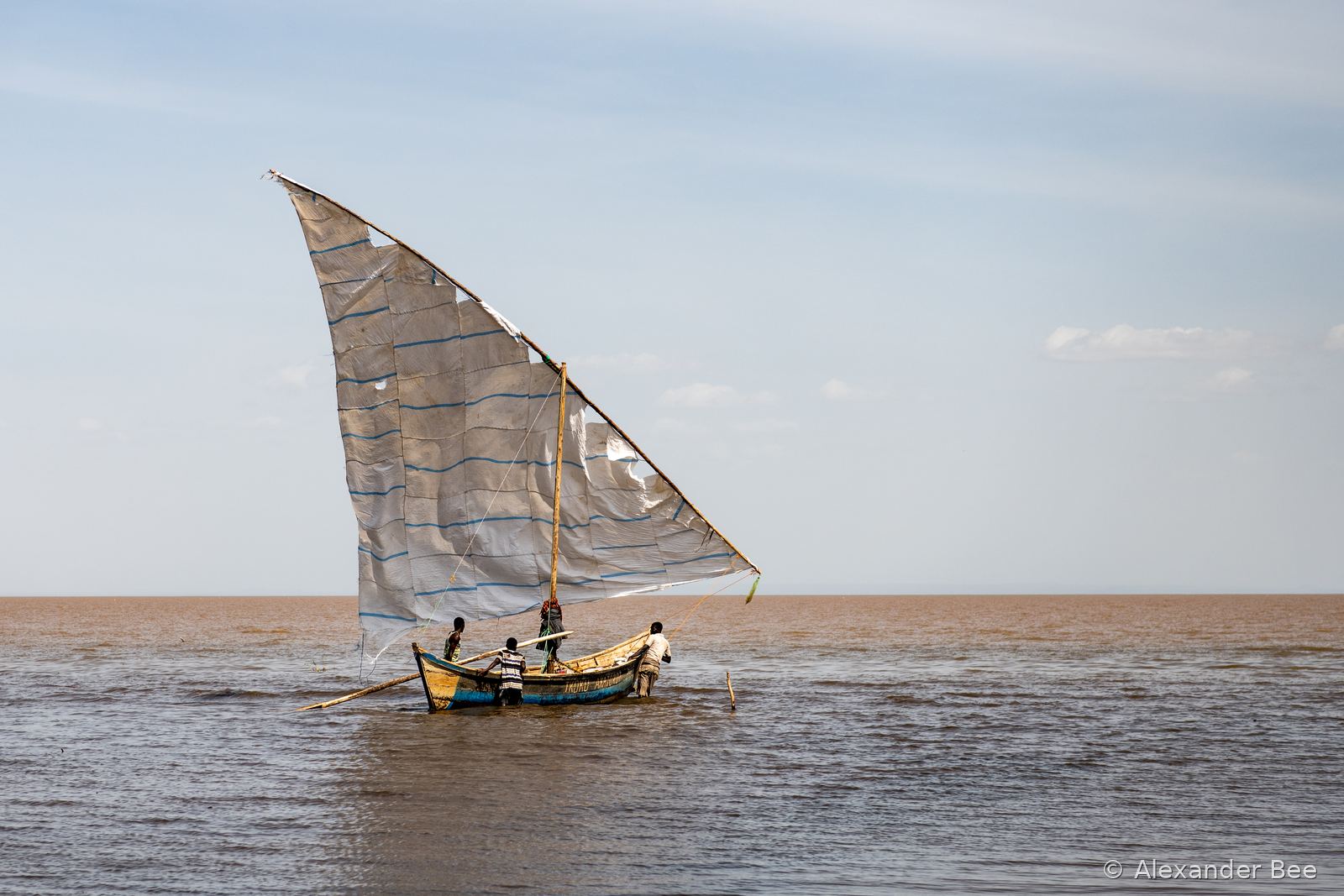
Droughts also force people to change trades. Herders who no longer have water for their livestock come down from the mountains and become fishermen on the lake. On its shores, you often meet women alone, whose husbands died in cross-border conflicts.
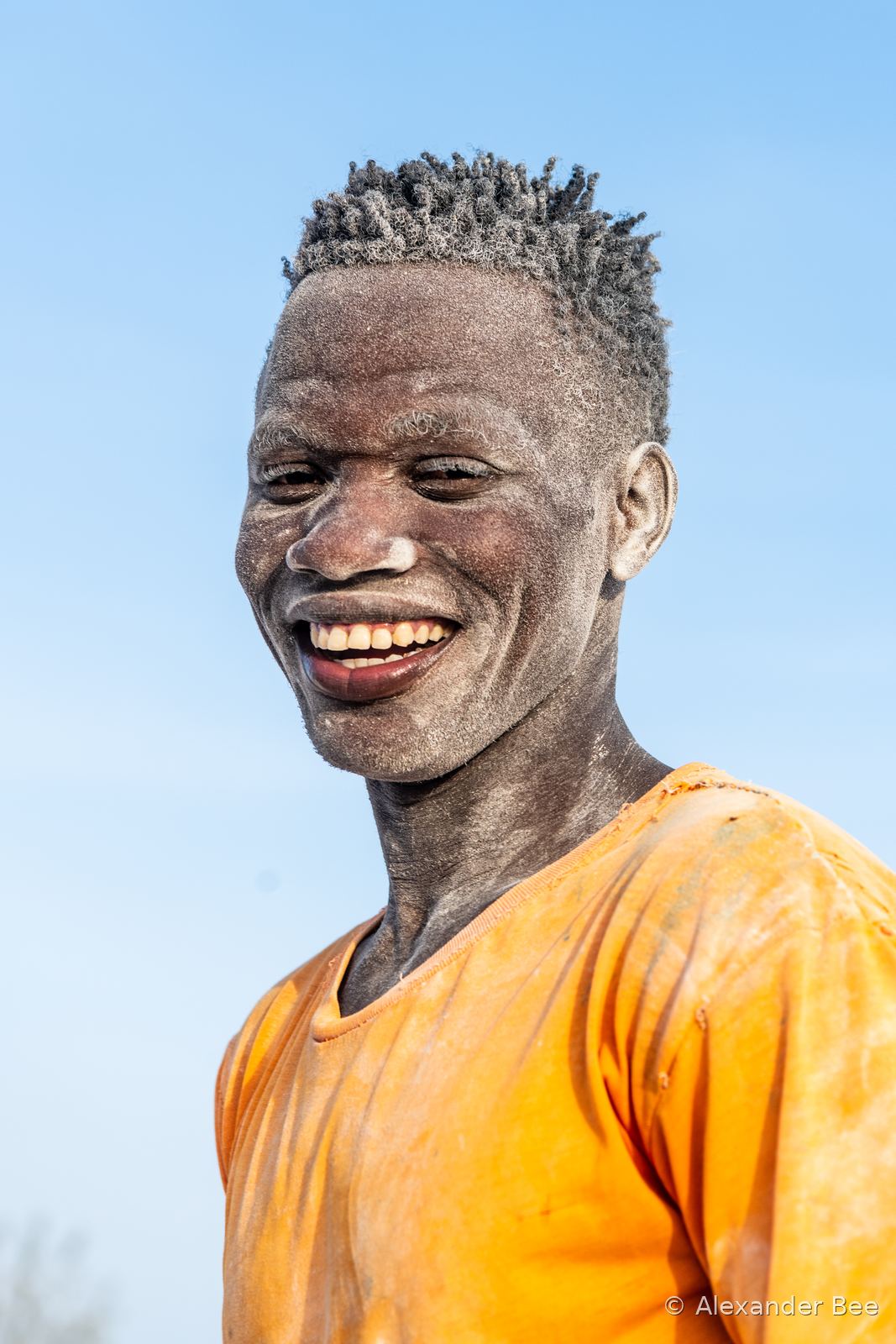
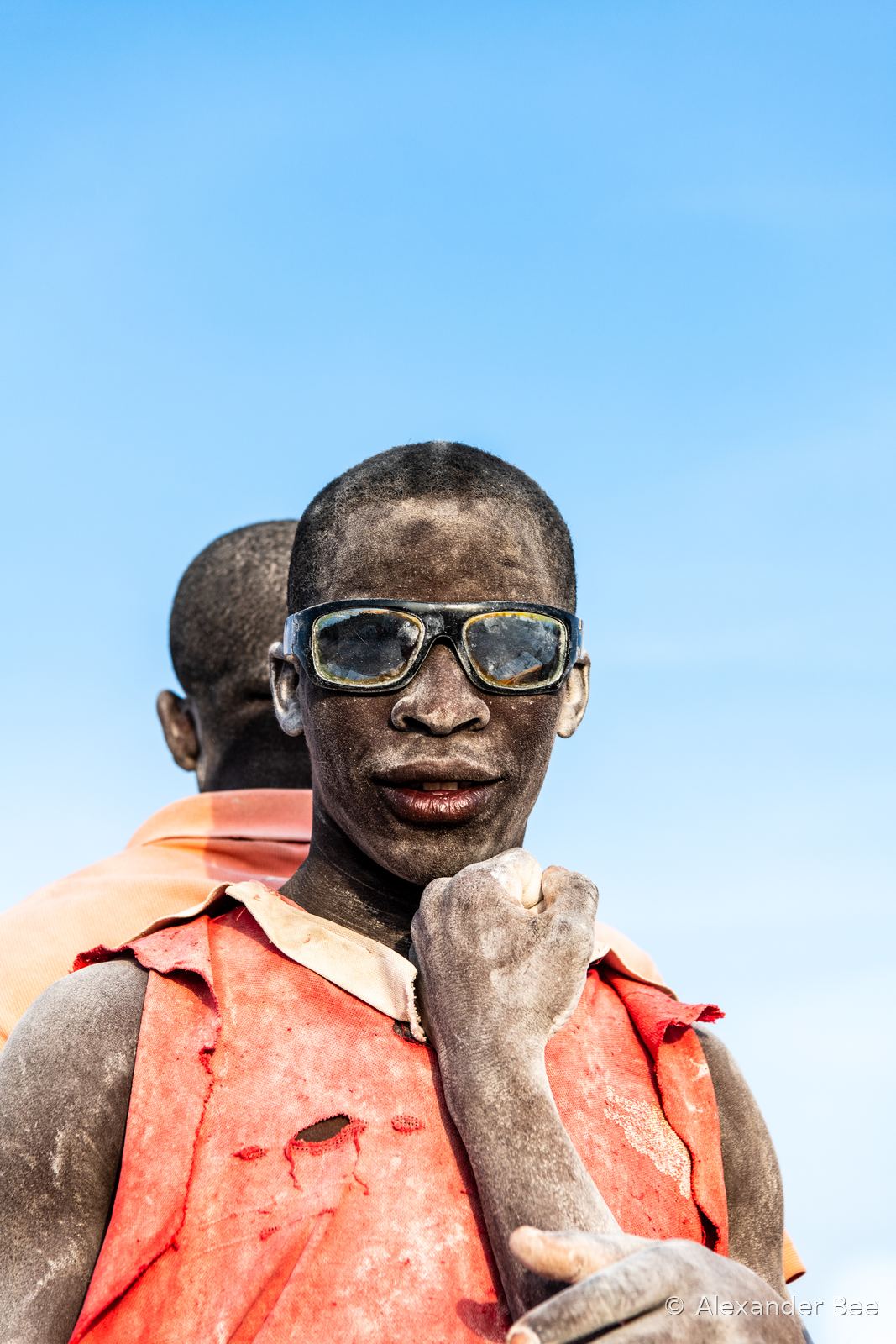
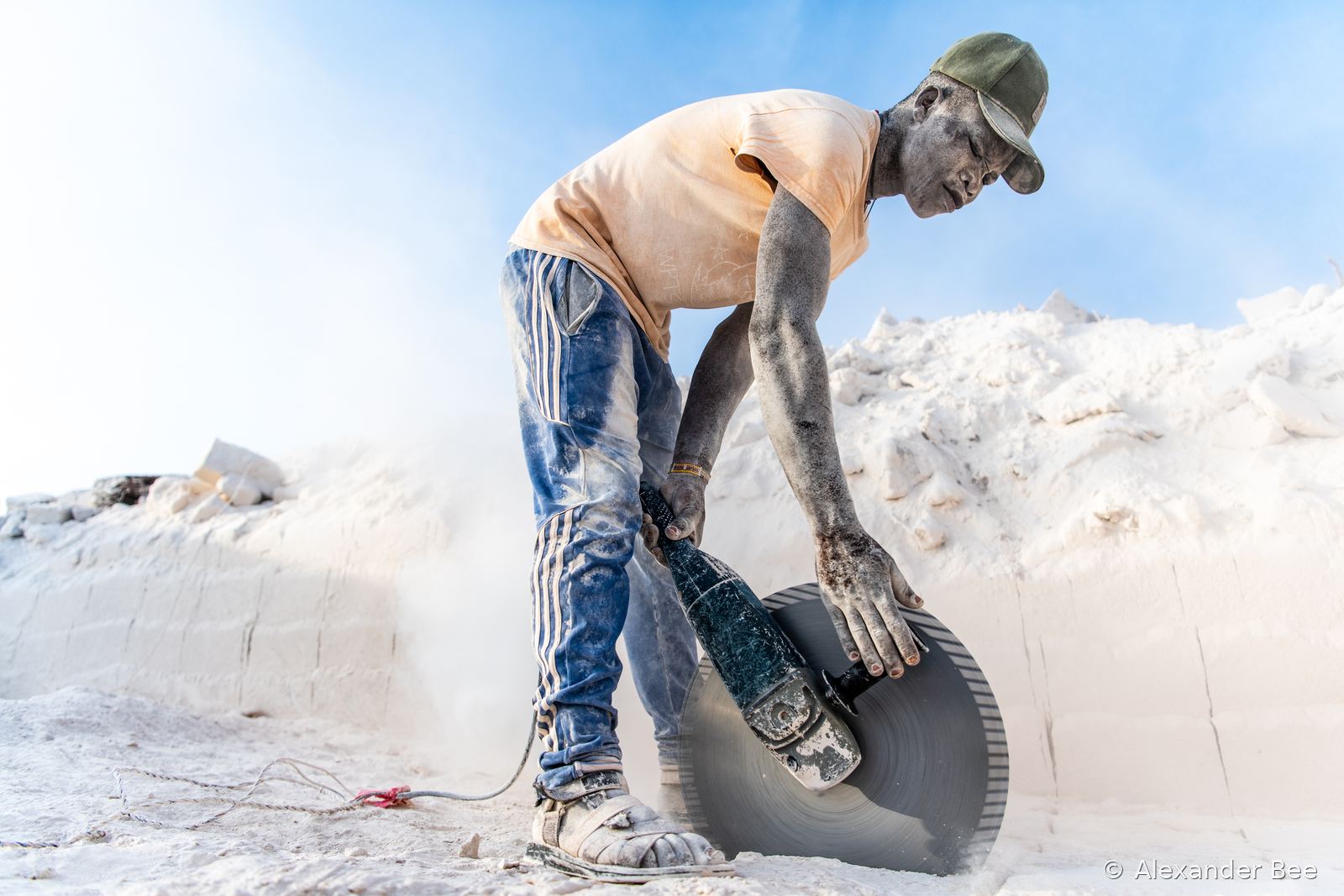
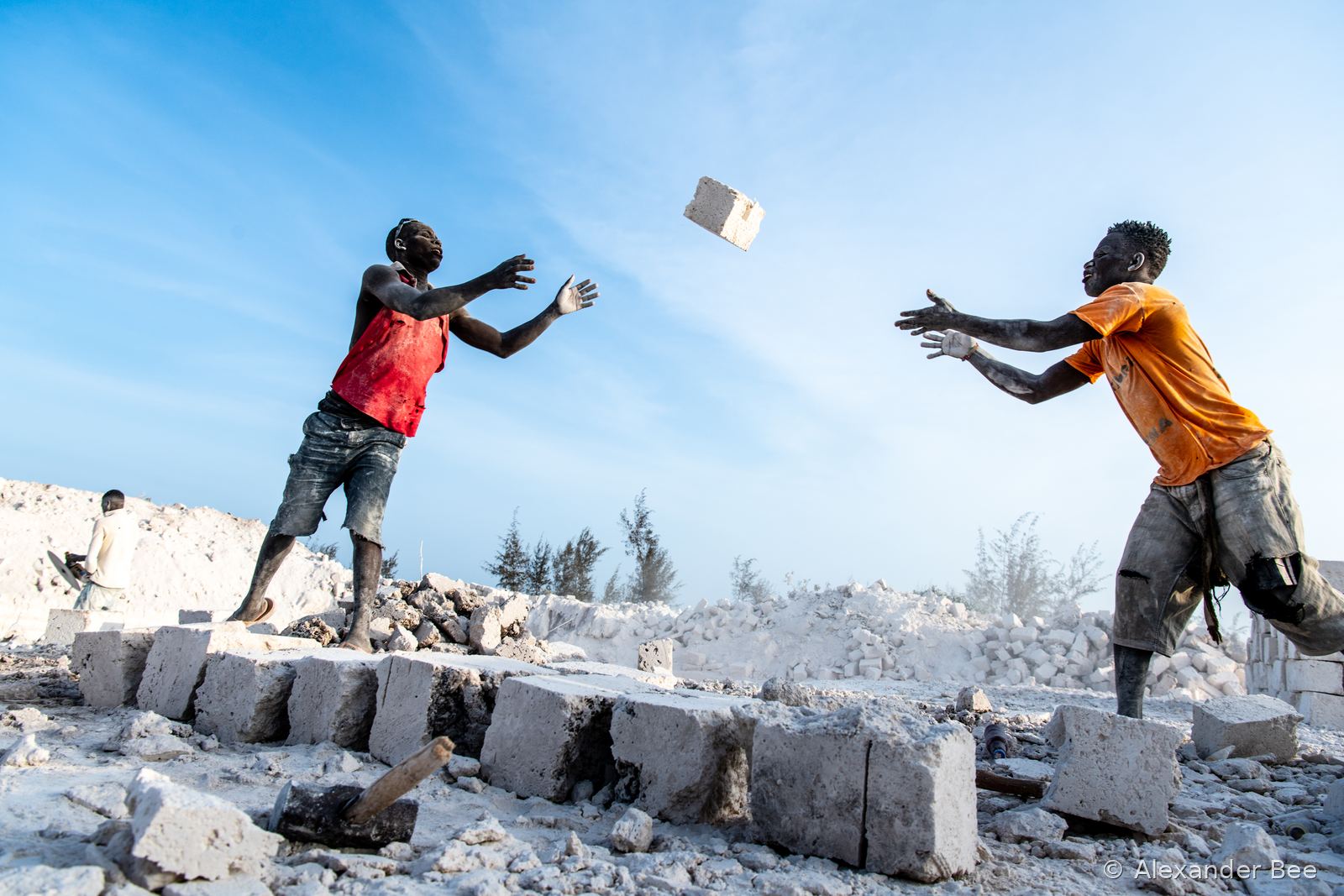
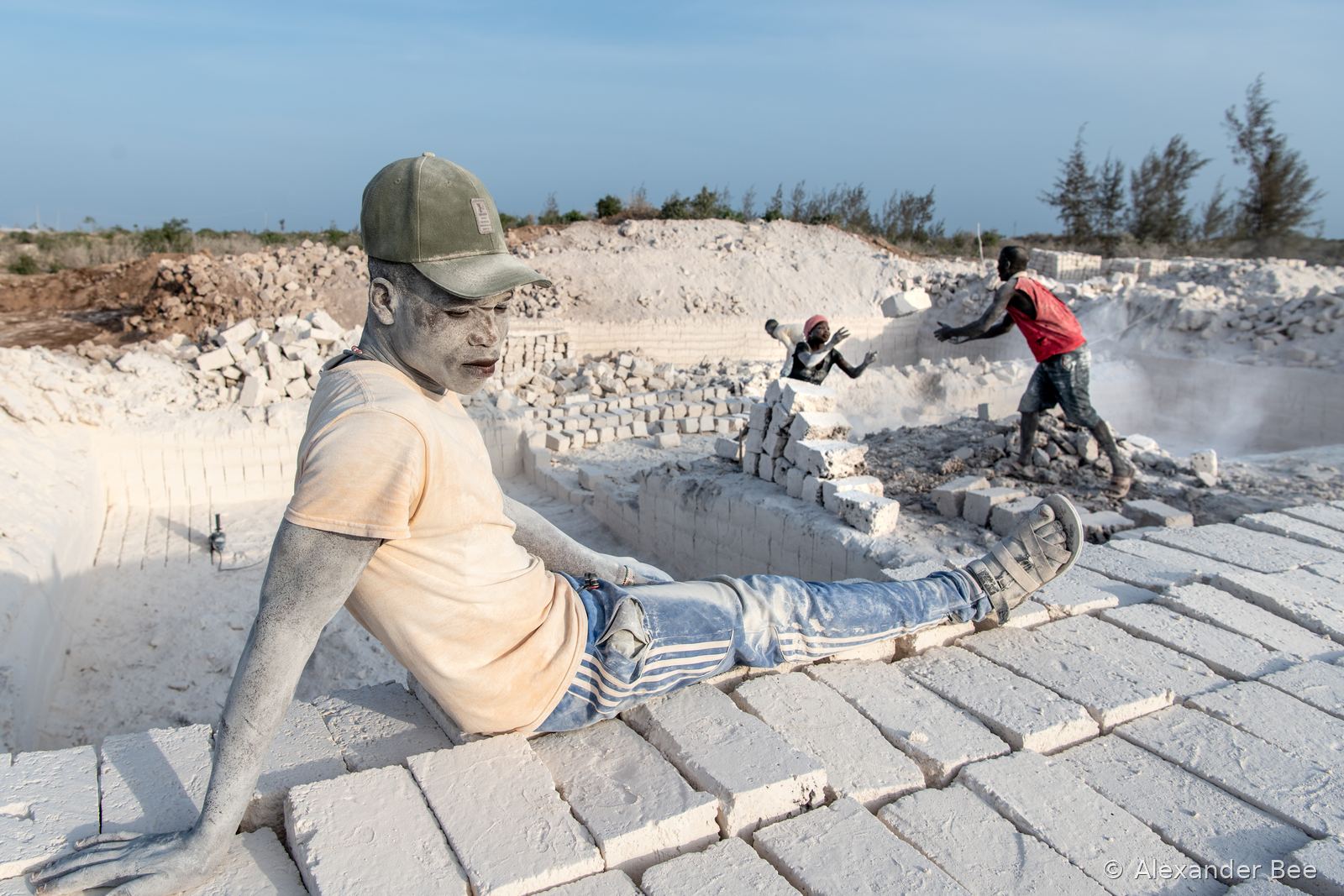
Meanwhile, the lake level changes the geography of the shores, which residents link to a dam built in Ethiopia. The village of Kalokol, which did not exist two years earlier, hosts displaced people and has become a hub of the fish trade. The photos also show quarry workers, covered in white dust, cutting stone and tossing blocks to one another.
Each image in this series has its place in a larger story: that of scarce resources and of those who share them. The gallery above lets you follow this story, from the waterhole to the quarry, by way of the lake shore.
This story is part of Alexander Bee’s documentary photography portfolio. You can also discover Faces of Kurdistan or Samburu. To buy a print or use a photo, contact me. To learn more: Lake Turkana on Wikipedia.
Photos © Alexander Bee – all rights reserved. Prints and licensing: contact me.


